Wednesday, July 27, 2011

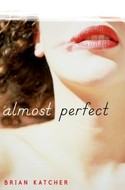
Almost Perfect

Katcher, Brian. Almost Perfect. New York: Delacorte Press - Random House Children's Books, 2009. Print.
[Book cover credit: librarything.com/work/8205913]

Awards:
ALA Best Books for Young Adults (2010)
ALA Quick Picks for Young Adult Readers (2010)ALA Rainbow List (Fiction, 2010)
ALA Stonewall Book Award (Children's and Young Adult Literature, 2010)

Booktalk:
     She turned to me. "Hi," she said. "I'm Sage Hendricks."
     Sage had a deep but sexy, feminine voice, the kind you hear on ads for 900 numbers. I waited for her to say something else.
     "Dude," whispered Tim, jabbing me with a chocolaty finger. "Your line."
p.18
As soon as she walked through the classroom door, Logan became enamored with Sage. But love is seldom without complications, and Sage's hard-to-get act is hiding a doozy of one.

Review:
Almost Perfect, how do I love thee? Let me count the ways.
I love thine characters in their complexity and their completeness,
From their talk of motorboating to their genuine concern for each other
They make me think of actual teenagers rather than teen-aged "types."
I love Tammi's fierce love for her sister, masquerading as aloofness:
Most quiet need to protect and hope at the same time.
I love Logan's mother, who has done her best in trying circumstances.
I love Logan's cool and supportive older sister (who tries to help him get laid).
Logan, I love thee. Insecurities and bravery and insecurities again
In situations never expected, and with grace unmatched by peers.
I love every characters' flaws; none is the pinnacle of righteousness or political correctness.
Sage, the object of Logan's affection and mine, shines as brightly as her braces.
She lives in the belief that the world can be better and love worth the risk;
And, if God choose, she is right.*


Seriously guys, this is an amazing book, and Brian Katcher is an amazing author.** That might explain why I've been waiting for my turn to read it from the library since it was announced as the winner of the Stonewall in January. It was more than worth the wait. Everyone has talked about the Big Issue that Almost Perfect addresses, but I have yet to see someone talk about how the issues (more than one, even) are in perfect balance with the flirting and the humor and the sexiness and the teenage-guy-ness of the book as a whole.

I loved it. You probably will too.


Book source: Philly Free Library (but I'm gonna go buy my own asap)


*  To Elizabeth Barrett Browning, I extend my greatest thanks for the inspiration. And my apologies.


** And also a practical genius! The standard has been set, folks, any author's note containing lists of websites that offer support to queer or genderqueer or drug addicted or suicidal or [insert thing you don't want your parents to know about here] kids should also contain detailed instructions for how to clear your cache history.

Links to Amazon.com may be affiliate links for the Amazon Associates program. If you buy something through this link, I may receive a referral fee.

Wednesday, July 20, 2011

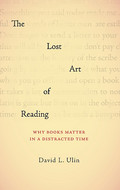
The Lost Art of Reading

Ulin, David L. The Lost Art of Reading: Why Books Matter in a Distracted Time. Seattle: Sasquatch Books, 2010. Print.
[Book cover credit: librarything.com/work/10530802]

Booktalk:
Sometime in the last few years -- I don't remember when, exactly -- I noticed I was having trouble sitting down to read. That's a problem if you read, as I do, for a living, but it's an even bigger problem if you read as a way of life.
p.9

"I write entirely to find out what I'm thinking, what I'm looking at, what I see and what it means. What I want and what I fear," Joan Didion notes in her essay "Why I Write," and it's no understatement to suggest that this is what the dynamic between a writer and a reader offers from the other side as well. Or it was, at any rate, until the moment I became aware, in an apartment full of books, that I could no longer find within myself the quiet necessary to read.
p.33

Review:
The Lost Art of Reading, which is really a long essay more than a book, chronicles Ulin's realization that he can't find the quiet to read in our plugged in, always on world. With all of the tweets and blogs and google searches and links leading to links leading to more links all with music playing the background, it's an understandable dilemma. It's also not that original. What makes Ulin's account different is the way he draws a parallel between his own inability to concentrate enough to just read and his son's inability to do the same because of classroom mandated annotations. Granted, this is not the main focus of the book, though his son's Great Gatsby assignment is what starts Ulin evaluating his own reading problems. Still, it is what really hit home for me. Two of the five articles I've linked to above are about over-"wired" kids who are so plugged into technology that they can't focus. Everything is an exercise in multitasking. When we finally sit these kids down in front of a great book like The Great Gatsby, why do we make them stop reading on a regular basis? I know, I know, it's so we can force them to analyze all of the similes and metaphors and tone and allusions. And so the kids can prove that they did the reading assignment. But really, why don't we let them just read?

Anyway, I loved this little book. It's full of readerly quotes from plenty of authors. I made a conscious effort to sit and read it in a day (it's roughly 100 pages), just to prove that I could maintain the concentration that Ulin could not. I know; I'm petty. I had no trouble turning off the TV, not checking status updates or email. I wrote down book titles I wanted to look up later on my due date card. And really, it wasn't that hard. Now, I'll be the first to admit that I do most of my reading on the train to and from work when I don't have an internet connection. At home I generally watch TV and at work, when I'm not actually working, I'm still on the computer. It was nice to know that I still have it in me to sit and read an entire book in a day. It's been a while.

Since reading this book, I have noticed that whenever I sit down at the computer to write (and review) I have all of Ulin's multitask-y symptoms. I check my email, check facebook, read articles, read all of your blogs, all with a blogger window or word document untouched in my taskbar. I'll write a sentence, read an article, format the picture for a blog post, check my email. I can't sustain the concentration to write in the way that I did in school or even the way that I do when I read (I don't know how you authors do it!). Ulin says his need to unplug when reading is part of the reason he hasn't switched to an ereader. If he could surf the web in the same device that he uses to read a book, he'd be doomed! Sometimes I feel that way about writing and reviewing. When I was an undergrad, I almost always wrote papers, or at least the backbone of papers, longhand before sitting down at a computer to type them out. I used to do that for my reviews as well, back when I was posting 2-3 a week. Instead now, I have a backlog of books to review that'll last me at least the rest of the month, and I still only manage to post one a week. If only I knew now what I knew then. :)

So, maybe I'll try to unplug a bit more often and get back to writing while Ulin unplugs and gets back to reading. How about you? Is the information superhighway impeding on your intellectual pursuits?


Book source: checked it out from work

Links to Amazon.com may be affiliate links for the Amazon Associates program. If you buy something through this link, I may receive a referral fee.

Wednesday, July 13, 2011

Threads and Flames

Friesner, Esther. Threads and Flames. New York: Viking, 2010. Print.
[Book cover credit: librarything.com/work/9688825]

Booktalk:
Before Raisa even takes her first steps in NYC, she has managed to acquire a younger "sister," and she's managed to lose the older sister with whom she was supposed to live. Through the kindness of strangers, serendipity, and not a little bit of trial and error, she manages to get a great job that allows her to both support Brina, her younger sister, and look for Henda, her older sister. She's lucky; the Triangle Shirtwaist Factory is one of the best places a girl can work in 1911.

Review:
I think the best thing about Threads and Flames is that Friesner provides oodles of information and context without ever making me feel that I'm reading a book about the plight of immigrants or factory girls and how the injustices they faced lead to the tragedy of the Triangle fire.* I was simply reading an engaging story about Raisa's new life in America, complete with a little bit of mystery, a little bit of (the cutest without being the least bit saccharine) romance, and a whole lot of my-gumption-is-both-my-greatest-flaw-and-my-greatest-strength. And yet I finished the book knowing a lot about how the ill-treatment of immigrants in general and factory girls in particular created the perfect storm of awfulness that caused so many deaths in the fire.

While the book is undoubtedly about the Triangle fire, Raisa doesn't even start working at the Triangle Shirtwaist Factory until at least halfway through the book, maybe more. Usually, this delay of the "point" of the story would drive me batty, but in this instance, I didn't mind the wait. Raisa is such a fun character; she's so headstrong and determined to do what is right for her sisters, both Henda and Brina. It never occurs to her that she shouldn't take responsibility for Brina, even though she can barely take care of herself. I was rooting for her before she even got to Ellis Island. Raisa's little romance with Gavrel is also handled beautifully. When you're reading about Raisa who is on her own and working more than full time to make enough money to cover room and board for two people, it's easy to forget how young she is. Her relationship with Gavrel, however, with all of Raisa's do I or don't I feelings, constantly reminded me that she's just in her early teens. Their romance had all the little flutters of any middle grade romance, but with the added seriousness of two people, no matter how young, who work full time and both immediately start working even more when they "get serious." That's why they're both in the factory on the Saturday when it catches fire.

The fire itself is gruesome. The rush for the elevators after finding all the doors locked, the description of girls jumping from the windows rather than dying the flames, the display of unclaimed bodies that Raisa must search for Gavrel afterwards. The broken families who either found bodies to claim or were left with nothing. It's all so harsh. We see it all through Raisa who is still so determined to do what's right, who finds another job right away, and who becomes the strength and stability that Brina and Gavrel's family need in the fire's aftermath. Watching her continue on was possibly just as, if not more, heartbreaking as the fire itself. Slightly spoilery (highlight away): When the ending was happier than I would have expected, it did not feel like a cop-out on Friesner's part. I was just happy Raisa got a little bit of what she deserved. 

There was recently a request on the yalsa-bk list-serv for fiction books that teach the reader something. I wish I had finished reading this book in time to suggest it! Threads and Flames is so informative, but it's still great fiction too. I highly recommend it!


Book source: Philly Free Library


* This book reminded me very much of Annette Laing's books in that way. I kept wanting to re-read A Different Day to see how Raisa's factory experience differed (or in a lot of ways didn't) from Hannah's experience 50 years earlier and across the pond.

Links to Amazon.com may be affiliate links for the Amazon Associates program. If you buy something through this link, I may receive a referral fee.

Tuesday, July 5, 2011

Chime


Billingsley, Franny. Chime. New York: Dial Books - Penguin Books (USA) Inc., 2011. Print.
[Book cover credit: librarything.com/work/10284513]

Booktalk:
I've confessed to everything and I'd like to be hanged.

Now, if you please.
p.1
Briony's life consists of two main pursuits. She's spent her whole life trying to hide the fact that she's a witch. Better to keep her neck out of the noose. And since her stepmother died -- correction, since Briony killed her stepmother -- she's been taking care of her twin sister Rose. But lately Briony's been a bit conflicted. When Rose gets the swamp cough, a disease that is slowly killing off the town's children, Briony has a choice: she can let Rose die or she can deliver a message on behalf of the creatures of the swamp in return for Rose's health, revealing her witchy self in the process.

It's not as though she really has a choice.

Review:
Chime is an interesting twist on the current paranormal fare. It's set in an unspecified past when England is in a kind of transitional phase. The Old Ones are still around, but they're being pushed back into disappearing wild places, such as the swamp that is being drained behind Briony's home. Her little town with its busy pub across from the gallows and Briony, the beautiful daughter of the town preacher who's being pursued by a handsome but dumb local guy, were comfortably recognizable. The addition of Eldric, the handsome AND charming son of a family friend, made me think I knew what I was in for. In a good way.

But I was wrong. I had no idea what a treat I was in for when I met Briony. She's smart and sarcastic and employs just the right kind of self-depreciating-but-everyone-else-is-annoying-too humor. For example:
Cecil teased me to reveal my worldly knowledge, and I found amusing ways to sidestep his questions, and on we went with this for quite a while until it occurred to me that this is what is called flirting.
It's a tedious exercise.
p.177
Underneath her slick veneer, Briony has some real self-hate. She is both a witch and a preacher's kid, after all. Her self-loathing competes pretty heavily with her self-preservation instinct as Briony tries to figure out how to appease the Old Ones in her swamp to save Rose (who not only has done nothing wrong but whose problems Briony also places on her own shoulders) and save her own neck at the same time.

As if a great and fun yet complex main character/narrator weren't enough, there's Eldric who really is very charming and sweet and a worthy book crush. His interactions with Briony, especially their "fraternity," were really cute and fun, though their relationship was not without some very serious complications. Issues with Briony and Rose's father added real emotional depth to the story in ways that an emotionally and physically absent father is usually not able. And, of course, there's Rose. I prefer that you read about and fall in love with her for yourself. In short, Chime is just one good thing after another; I highly recommend it!


Book source: Philly Free Library


Links to Amazon.com may be affiliate links for the Amazon Associates program. If you buy something through this link, I may receive a referral fee.

Wednesday, June 29, 2011

Falling for Hamlet

Ray, Michelle. Falling for Hamlet. New York: Poppy - Hatchette Book Group, 2011. Print.
[Book cover credit: librarything.com/work/10848571]

Booktalk:
Not too long ago in modern-day Denmark, there was a prince. He was handsome and smart and, of course, very charming. His girlfriend, a beautiful media darling, was the daughter of a palace adviser, and together they tried to live normal happy lives while their faces smiled out from grocery store magazine racks. Then the unthinkable happened. The king, the prince's father, died. And our sweet prince lost it, falling into grief and paranoia, and leaving his beautiful girlfriend to fend for herself among the wolves, both inside the palace and out.

Review:
Let me start by saying that you should not judge this book by its cover. Or by its opening lines:
"Frailty, thy name is woman." - William Shakespeare
"Willy, thy name is sexism." - Ophelia
Don't get me wrong, both have very much to do with the story (other than Hamlet's hair color on the cover), but they really make this look like a much lighter, funnier, beach read kind of book than it really is. I mean, really, how would one make an adaption of Hamlet light? Instead, this book is everything it should be; it's brooding and dark and, at times, intense. It's also narrated by a strong Ophelia who is understandably worried (and sometimes so tired/drunk she's a bit loopy - how else could one explain the flower scene) about her boyfriend's apparent loss of sanity but who also does her best to be supportive and helpful to those around her, especially her aforementioned boyfriend and her widower father, all while trying to keep her own life together in the midst of circumstances no high school senior should have to deal with. She is so at odds with both the classic and modern versions of how we usually see the character of Ophelia. I loved it.

The story stays pretty true to the original, with one major difference that is given away on the jacket flap: Ophelia survives. The motivations behind people's actions, however, are different. The "truth," what Ophelia is telling us the readers, is book-ended by Ophelia's tell-all appearance on fake-Danish-Oprah in the beginning of each chapter and her interrogation by the Danish police at the end. These three concurrent tellings of the same story, illustrate the fabrication of what we take for "fact" from the media and the reach of a government cover-up more explicitly than that paparazzi pic on the cover ever could. On faux-prah, Ophelia is sweet, in love, heart-broken, and kind of ditzy. She's the almost princess. While being interrogated, she is bitingly sarcastic, angry, and fiercely loyal to Horatio and Marcellus, the only other people to survive the bloodbath that is this story. She's accused of being the master-mind of a plot to overthrow the Danish monarchy. In between, she's just a girl doing her best to do what's right for herself and those she loves.

Really and truly, I loved this book. It sucked me into the story and kept me on the edge of my seat even though I knew, more or less, what was going to happen. The characters were well-rounded and real in ways that Shakespeare characters usually are not. I cried when the king died. Have you ever cared about Hamlet's dad enough to even care that he's dead? I haven't. And Hamlet himself made a bit more sense, not a lot, but a bit. Giving him a happy background with Ophelia, at least in flashbacks, made their whole relationship much more believable which made it all the more crushing when he becomes cruel. Michelle Ray has managed to take a story that I already knew well and liked, and she made it into something new and original that I love. I can't wait to see what she comes up with next.


Falling for Hamlet comes out July 5th!


Book source: ARC provided by the publisher.

Links to Amazon.com may be affiliate links for the Amazon Associates program. If you buy something through this link, I may receive a referral fee.
Tuesday, June 21, 2011

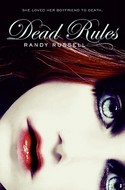
Dead Rules


Russell, Randy. Dead Rules. New York: HarperTeen - HarperCollins Publishers, 2011. Print.
[Book cover credit: librarything.com/work/10226008]

Booktalk:
It was the first time Jana had thought the words Dead School.
But that was it. She was dead. And she was in school. They should put the name over the door so you didn't have to guess when you first got here.
p.34
Worse than that, she's alone. Surrounded by other dead teens, sure, but she might as well be stranded alone in the desert without Michael. She's sure he feels the same way. And since she can't go back to him, he must already being trying to figure out a way to join her. And if he's not, well, she'll help him.

Review:
This book was pitched to me as a cross between Romeo and Juliet and Heathers. That was certainly enough for me, and I'm guessing it's going to be enough for a lot of you as well. If it's not, or if you're unfamiliar with the genius that is Heathers (or you're talking to a group of teens who've yet to see it), don't worry. Dead Rules is great, and familiarity with Heathers is certainly not necessary in order to understand this book. Some would say it is necessary for life in general, but I would never try to force my subversive loves on all of you (though the links above lead to some pretty great/convincing pics from the movie). ;)

Jana is absolutely heartbroken to be away from Michael in the afterlife. She is one of those girls who does not exist outside of her relationship. She even introduces herself as Jana, of Webster and Haynes (as in Jana Webster and Michael Haynes). I have to admit that I kind of hate those girls. In the beginning of this book, Jana was no exception. Luckily she pairs up with Mars Dreamcote (yes, it conveniently rhymes with dreamboat) pretty quickly. I don't know that I would have been able to stick it out through a whole book of her otherwise, and that would have been a shame. This book is more than just Jana and her longing for Michael. It's also about Jana's adjustment to the afterlife, Mars's lack of adjustment, Arva, Beatrice, Christie, Wyatt(!), the grays, and the virgins.

The social hierarchy of Dead School, like that of any high school, is complicated to outsiders, and I liked watching Jana figure out how to navigate and then ignore it. The sliders vs. risers was something that I wished was explained a little bit more, but it's clear that Jana (and we) find out everything that the students know about why most people end up in one of these two groups. Any more information would have made this a completely different book as it would have required more sleuthing and less Michael's-death planning. Getting all her information from other students definitely enhanced the story. As Jana gets to know her roommates, Mars's slider buddies, and other folks around campus, she also gets to hear their death stories, and I LOVED reading everyone's death stories. They very nicely ranged from the ridiculous to the very, very serious/tragic.

Overall, Dead Rules is a fun read! It's less romance-y than your average paranormal romance. In fact, it kind of pokes holes in the idea of blind devotion and teenage lurv that lasts for all eternity. That and the dark humor made it a great fit for me, and I think other readers who roll their eyes at flowery proclamations and super-serious feeelins will love it too (as will the average Heathers fan). Those looking for the story of a love that continues beyond the grave may not.


Dead Rules comes out today and is now available for purchase!


Book source: ARC provided by the publisher.

Links to Amazon.com may be affiliate links for the Amazon Associates program. If you buy something through this link, I may receive a referral fee.

Tuesday, June 14, 2011

In which I do not fall off the face of the earth

but instead I get really busy.

So June's turning out to be a ridiculously busy month for me. I thought I could keep up and you all would be none the wiser. But let's be honest, I'm not that on top of things.

First there was the girlfriend's brother's wedding, which was lovely if not a little overly warm. There was also a party bus involved and I got to show off my mad dress bustling skills (on I-95 no less).

Then the girlfriend's other brother graduated from high school, which was also fun.

Then there was Linds' ordination, which was beautiful. It's also probably the only time in my life that I'll ever get to sign a legal document stating that someone has upstanding moral character.

Then we bought iPads at work (I know, life is hard sometimes), and as the emerging technologies librarian I've been running around like a crazy person to make them usable on our network, with office documents, etc.

Now I'm writing to you all from the back row of a conference session in Lancaster (wave to the Amish!) on my almost totally functional iPad! It doesn't let me use the compose function in blogger, though, so I can't do anything too fancy.

I'm giving myself until next week to recover, and then I'll be back with a review of Dead Rules, which is pretty great.


Happy June, folks. Who said summer was supposed to be relaxing?


Links to Amazon.com may be affiliate links for the Amazon Associates program. If you buy something through this link, I may receive a referral fee.

Monday, June 6, 2011

The Twisted Thread

Bacon, Charlotte. The Twisted Thread. New York: Voice - Hyperion, 2011. Print.
[Book cover credit: goodreads.com/book/show/9519064-the-twisted-thread]

Booktalk:
When Madeline returns from her moning jog, she can tell something's wrong from across the green. Not only are her students awake at what they consider the unholy hour of 7am, but they're all on the lawn with police surrounding the dorm. Claire Harkness is dead. And that's not all.
"No, no, that's not possible. Sally, did Claire just have a baby?" Madeline said sharply, still holding the girl but lifting her chin so she could stare into the narrow face. "Where's the baby?" Madeline found that she was almost shaking Sally's bony shoulders. ...
     Sally shook her had and could not speak. "I don't know," she finally whispered. "He's gone..."
p.11*

Review:
The Twisted Thread follows English teacher intern Madeline, art teacher Fred, detective Matt, and facilities handyman Jim as they each play their parts trying to unravel how the unthinkable has happened at the prestigious Armitage Academy. They start with Claire's death and the disappearance of her baby and work their way backwards through Claire's actions and motives to figure out what really happened. Following four different narrators was a bit challenging in the beginning, while I was still getting to know all of them. Though the point of view changes, the story never retraces its steps so that we see the same even through different eyes. Usually, I really appreciate that! This time, however, I do have to admit to some flipping back and forth trying to figure out why I was suddenly dumped into the head of someone I'd just met. Fred and Matt both interact with Madeline a lot, so the changing point of view, sometimes in the same scene (but different chapters!), seemed unneccesarily confusing in a few places, especially without the help of backing up the action a little bit so that the reader can get their bearings.

Of all our narrators, Madeline is the star of the show. She struggles with a lot of guilt because she didn't notice anything wrong (or preggers) with Claire, her student and resident in her dorm. She is also struggling to figure out what to do with her life. It is the emotional ringer of riding out the aftermath of Claire's death with the remaining students on campus that finally allows/makes her kind of grow up and make Real Life Decisions. The absence of any teen narrators in this high school boarding school book makes the adult hand-wringing a little more pronounced. It's not something that bothered me at all. It never veered into preachy or overly dramatic; it was all very believable. Still, I think it'll be a turn-off to some teen readers who may construe it as just more "kids these days" criticism. So while there is nothing in this book that would make me hesitate giving it to a high schooler to read, it's definitely not the book for a reader of primarily young adult literature who is looking for a good boarding school mystery.

That said, it is dead high school senior Claire, or at least her presence/memory, that brings depth to the stories in ways that I can't share without spoiling it for you. Just trust me when I say that the mystery goes far beyond how beautiful, intelligent, priviedged, and ultimately more complicated than anyone dared guess Claire Harkness died.


The Twisted Thread will be out and available for purchase June 14th!


Book source: ARC provided by the publisher through the LibraryThing Early Reviewers program.


*Quotes and page numbers are from an uncorrected proof and may not match the published copy.


Links to Amazon.com may be affiliate links for the Amazon Associates program. If you buy something through this link, I may receive a referral fee.

Friday, June 3, 2011

48 Hour Book Challenge!


It's here! I can't believe that I didn't remember this morning. That really doesn't bode well for my weekend.

Speaking of which, I pretty much know that I won't be able to cram in 12 hours of reading this weekend, especially since my morning commute happens too early to count (depressing in so many ways). Also, I have a (wonderful!) houseguest all weekend and a family wedding to go to tomorrow. But I'll be reading with you all in spirit!

If you haven't signed up yet, you should!


Links to Amazon.com may be affiliate links for the Amazon Associates program. If you buy something through this link, I may receive a referral fee.

Wednesday, June 1, 2011

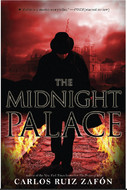
The Midnight Palace

Zafón, Carlos Ruiz. The Midnight Palace. Trans. Lucia Graves. New York: Little, Brown and Company, 2011. Print.
[Book cover credit: librarything.com/work/3595363]

Booktalk:
On a dark night in 1916, a man ran through the streets of Calcutta in fear for his life. And in fear for the lives of the infant twins he carried. Sixteen years later, Ben meets Sheere, an intense girl exactly his age, and starts seeing ghost trains in the night. Together with a group of Ben's friends, they seek out the source of Ben's visions and their own history, which leads them back to a dark night in 1916...

Review:
If you are a fan of Carlos Ruiz Zafón's adult novels (which I am, go read Shadow of the Wind right now!), this may not be the book for you. It lacks some of the magic of his adult work. However, if you are the kind of reader who likes to see the evolution of a writer's work as he hones his skill (guilty again), this is most definitely the book for you. Written before his adult works but translated into English later, The Midnight Palace shows the beginning of CRZ's talent for layering stories, juggling a large cast of characters (though none are very well rounded in this one), and placing the unbelievable in the middle of a believable  place and time. Unfortunately, his ability to turn a place into a character in its own right is not on display here, which is a shame because Calcutta would have been a good one. Here, it is incidental rather than integral to the story. If you're not already a fan or CRZ, really, go read Shadow of the Wind. Also, the rest of this review is for you.

The Midnight Palace is not the kind of book I usually read. It's an action/horror/paranormal-type hybrid that leans toward the scary/creepy end of things, and it is not at all character-driven. No one really grows or changes because of what happens. It has both a prologue (not my fave) and a where-are-they-now epilogue (one of my pet peeves). And yet, I really enjoyed reading it. While I was reading, I was scared and jumpy right along with the rest of Ben's gang. I was concerned for everyone's safety because they were so concerned for each other. I was nodding along with Sheere when she longed to be part of a group like theirs. It looked like fun (until it looked like a house of horrors), and I wish CRZ had let me, the reader, a bit more into the group. I never felt like I got to know any of the characters, Ben and Sheere included. Frankly, almost as soon as I finished reading, they were gone from my mind. What they went through and what they did, though, that stayed with me.

Looking back, there were holes and a few things that could have used an explanation, but I didn't notice at the time. I was too caught up in the bowels of a burnt-out train station with the rest of the gang. There was plenty going on to keep my attention. In addition to the ghost train there is a pool of blood that never dries, a grandma who operates strictly on a need-to-know basis and fails to realize that Ben and Sheere Need to Know it all, court records in vast archives, an architect's dream house, and a guy whose hand burst into flame on a disturbingly regular basis. The action is quick, the consequences are severe, and the reasons behind it all are shrouded in mystery.

In short this is a quick, fun read. It's certainly not light and fluffy summer reading, but it's the dark and stormy night equivalent.


The Midnight Palace is out and available for purchase now!


Book source: ARC provided by the publisher.
Series note: Goodreads has this book listed as the second in a series with Prince of the Mist as the first. However, nothing in the book indicated that this is not a stand-alone novel.

Links to Amazon.com may be affiliate links for the Amazon Associates program. If you buy something through this link, I may receive a referral fee.