Showing posts with label dance. Show all posts

Tuesday, November 30, 2010

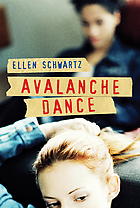
Avalanche Dance

Tween Tuesday was started over at Green Bean Teen Queen as away to highlight awesome books for the 9-12 yr olds or Tweens. Any book highlighted on Tween Tuesday also counts for the In the Middle Reading Challenge! This week's book is:

Schwartz, Ellen. Avalanche Dance. Toronto: Tundra Books, 2010. Print.
[Book cover credit: librarything.com/work/9679604]

Booktalk:
Gwen has always been a dancer, flitting about through her childhood making up movements. She's always known that she will always be a dancer, but her dream is to become a choreographer. The three-week Dancemakers workshop in the city would give her everything she'd need to realize that dream. But it's expensive and it's far away from the tiny mountain town that she lives in with her family. Her father doesn't want her to go. When their argument about the workshop is cut short by a late spring avalanche, Gwen could lose so much more than her dream to be a choreographer. She could lose the ability to dance, or even walk, at all. And she could lose her father.

Review:
Following the avalanche, Gwen isolates herself entirely. She feels responsible, and she doesn't feel like she can tell anyone. This is partly because she's had a major falling out with her best friend (of forever), Molly, over Molly's new found fascination with alcohol and pot (and yes, these are 13yr olds).

Even though there are some more mature issues brought up in this book, particularly the drinking and substance abuse, Avalanche Dance never lost that tweener feel. Though both girls are dealing with things that they shouldn't have to deal with until they are older (the possible loss of a parent, drug abuse), they both still handle it like the 13 year olds that they are. That said, this is not a book for every 9-12 year old. The parties Molly attends are important to the story and her actions there are described in detail. And her post-Gwen friends are much more hard-core than she is. But more than Molly's actions (which are never portrayed preachily), the way that Gwen links her own actions to her father's injuries might be too much for some younger readers. Knowing very little about avalanches, it was very easy for me to think, like Gwen, that if she hadn't argued with her father, they both would have made it home from their impromptu ski trip just fine.* Clearly the way that Gwen deals with these feelings of guilt is not ideal, but I completely understood why she felt the way that she did. The cause and effect is so much more believable than your average misplaced guilt about a parents’ divorce or something similar.

Told in their alternating viewpoints, Avalanche Dance is really about Gwen and Molly’s relationship to each other. Throughout the book, both Molly and Gwen reflect on the relationship that they used to have, how it fell apart, and how much (if they'd only admit it) they miss it. When Molly is sentenced to community service, to be served at Gwen's house, the two are forced to face each other and their problems. This is the real the meat of the story. Molly can see that Gwen is dying inside and Gwen, though still hurt, is very protective of Molly. Even though their friendship is mostly seen in the girls’ memories, this qualifies as another great girl friendship book. Even when neither wants to talk to the other, I loved the way that they miss and worry about each other.

For the readers who want a book about a dancer:
I always go into fiction books and movies about dancers very warily,** especially those about kids and teens dancing. I'm not delusional enough to think that my experiences as a very committed young dancer are the only experiences that are authentic, but I'm always worried that something will be said or portrayed in a way that will ring so untrue to me that I won't be able to let it go. Things as small as how the ribbons on shoes are tied have ruined what are probably very good stories for me. I braced myself to read Avalanche Dance, waiting as I was reading for something to go wrong. Nothing did. Instead, I was sucked into Gwen's story and Gwen's life.

The way that she dances, with her whole self, and the way she feels about dance, like it is her life force, felt very real to me. They way she grieves over it when she thinks she has to put it aside, also felt heartbreakingly authentic. For example, after Gwen experiences debilitating, but unexplained, pain in her leg, she cuts her hair:
Gwen picked up the scissor. She lifted a hank of hair. Tears rolling down her cheeks, she cut. A clump of hair fell into the sink. She lifted the next piece of hair.
p.57
I remember that feeling from the first time I got my hair cut without explaining to the hairdresser that my hair needed to be able to be gathered into a ponytail with enough left over to attach a hair piece. It was terrifying. It was also a life changing moment for me: I was no longer a dancer. It's the same for Gwen; that haircut is her proof. But Gwen's story does have an uplifting end. And though Molly is eventually the one who saves her, it's dancing that brings her completely back to herself in the end.


Book source: Review copy provided by the publisher through the LibraryThing Early Reviewers program.


*Disney has taught me, hopefully among other folks, that yelling on the side of a snowy mountain has clear and immediate consequences.

**That new Black Swan movie? It looks awesome and I'm definitely going to see it, but I'll be watching all the dancing scenes through my fingers. I mean, Natalie Portman as a ballerina I can almost accept (she carries herself well), but how will she do the dancing scenes? They're going to use a double, right? And what about Winona Ryder and Mila Kunis?!? The queens of the all-time slouchers? Are they kidding? They couldn't find any ACTUAL dancers who want to make a break into the movie biz? Really?

Friday, May 14, 2010

Amiri & Odette

Myers, Walter Dean. Amiri & Odette: A Love Story. Illustrations by Javaka Steptoe. New York: Scholastic Press, 2009. Print.
[Book cover credit: librarything.com/work/6906772]

Booktalk:
I asked myself if there were modern dangers to young people similar to magic spells of folklore. The answer, of course, was a resounding yes, and I began to craft a modern, urban retelling of the Swan Lake ballet.
from "How I Came to Write This Poem"
(unpaged)

Amiri is the basketball playing "prince" of the Swan Lake Projects, destined to fall in love with Odette, a woman "cursed" and owned by her dealer, Big Red.

Review:
I can't unknow the story of Swan Lake, so I am not a good judge of how clear that story in in Amiri & Odette to the non-balletomane. I can, however, say that there are a lot of little touches that hark back to the ballet in beautiful ways, such as Odile's (who is never actually named in the book) black mask at Amiri's party, but nifty connections to the ballet are not the strongest part of this telling. What Myers does fantastically is really make this a story that isn't about princes and magic; he makes it real. The curse is drug addiction and the evil wizard, a dealer. This makes the cause and effect of Amiri's profession of love for Odile a bit nonsensical (Odette's addiction and debt to Big Red will not magically go away if Amiri loves her and only her, nor will she be trapped in that life with no possible means of escape if Amiri doesn't love her), but it also leaves room for non-magical consequences. There is no but-the-spell-said moment that makes Amiri's mistake irreparable. Just because the deal is broken, doesn't mean that the curse is everlasting or that Odette is doomed. Myers' telling makes way for a change in the ending.

The artwork in Amiri & Odette is fabulous. It is dark and gritty and portends doom in a way that dozens of classical white tutus never could.* The artist's note says that the collages that make up the illustrations were painted on slabs on asphalt. They are large and hardcore; each a complete work of art on its own. The texture of the asphalt shows through and Chinese food menus, feathers, pieces of jewelry and other street flotsam are used throughout. The feathers surrounding Odette as she tells Amiri about her entrapment make her look like both an angel and a beast, much like the swan-woman Prince Siegfried is initially afraid of in the original story, even if all the audience sees is a ballerina in white. Or a girl watching a basketball game.


There have been countless stagings of Swan Lake, and all but the most traditional performances (the ones that dance four full acts) are showing some kind of adaptation for the modern audience. I can't embed the videos here, but I can give you links to a few versions of Swan Lake:
Classic Odette Variation by Svetlana Zakharova (2:43)
Classic Odile Variation by Svetlana Zakharova (2:40)
Matthew Bourne's staging of the pas de deux between Odette and Prince Siegfried (5:58)
Parody of the "Baby Swans" pas de quatre by Ballet Trockadero (1:37)


Book source: Philly Free Library

*Romantic white tutus (the long ones), on the other hand, suggest doom quite nicely. In the midst of this trend of YA paranormal romances, where is the modern day adaptation of Giselle?!?

Tuesday, May 11, 2010

To Dance - for Tween Tuesday

Tween Tuesday was started over at Green Bean Teen Queen as away to highlight awesome books for the 9-12 yr olds or Tweens. Any book highlighted on Tween Tuesday also counts for the In the Middle Reading Challenge!* This week's book is:

Siegel, Siena Cherson. To Dance: A Ballerina's Graphic Novel. Illustrations by Mark Siegel. New York: Aladdin Paperbacks - Simon & Schuster, 2006. Print.
[Book cover credit: librarything.com/work/1604483]

Awards:
NPR's Complete Holiday Book Recommendations (2006)
School Library Journal Best Book of the Year (2006)
ALA Great Graphic Novels for Teens (2007)
ALA Notable Children's Book (2007)
Booklist's Top 10 Graphic Novels for Youth (2007)
Sibert Honor (2007)

Booktalk:
Big empty spaces always made me dance. A long hallway or a parking lot just begged for dance ... like it wanted to be filled ... and I wanted to put dance in it.
(unpaged)

So young Siena decides, like so many others, that she wants to be a ballerina. And then, for a time, she is.

Review:
To Dance tells the familiar story of a young girl, in this case Siena when she was a child, who wants to grow up to be a ballerina. She starts ballet lessons, shows a real talent, and makes it to New York City where she trains in a feeder school for a big ballet company, in this case New York City Ballet’s School of American Ballet, where she is discovered. Mark Siegel’s illustrations allow the reader to share in Siena’s wonder and sometimes confusion with this whole new world in which she finds herself. He is also a kind of translator for the “uninitiated” in ballet lore and jargon, providing illustrations and examples of being en pointe and or dancing a pas de deux to name a few. For this reason, the format of the graphic novel works very well here. It elevates the reading level beyond that of a picture book without wordy explanations that detract from the story. Those who are more familiar with ballet will find the illustrations amusing and beautiful with gorgeous renditions of the varying levels of ballet classes and some “cameo appearances” of the big names of the New York City Ballet in the 1970’s to early 1980’s.

This basic story has been told many times. Two examples that jump out from my reading history are Ballerina Dreams, an easy reader by New York City Ballet’s Diana White and Gelsey Kirkland’s only-for-grown-ups memoir, Dancing on My Grave. The big difference between these books and To Dance, aside from format, is that even those well-versed in the recent and current ballet world will not recognize the name Siena Cherson Siegel; she is not a ballerina. As chronicled in this graphic novel, Siegel dances in a few performances with the New York City Ballet in pre-professional roles, but then goes on to attend college at Brown and dance for her own enjoyment rather than dance professionally. The ending to this story is very rarely told, though much more common. To Dance emphasizes how dance can mold one’s life while at the same time, showing how Siena takes the time to be a “normal” kid as well as positively showing her choice not to dance professionally. By sharing her story in To Dance, Siegel is affirming anyone who wants to use anything that they are talented at or simply enjoy as a hobby, an enjoyment, rather than a career choice. For this reason, along with the beauty of the illustrations and Siegel’s writing, I highly recommend this book.


Book source: Birthday present, years ago, from Nanna. :)

*Except that I'm not counting this one, as it's a re-read. I'm posting this review so that I'll have a complete list of reviews for my Unsung YA Heroes post.

Friday, April 16, 2010

The Splendor Falls

Clement-Moore, Rosemary. The Splendor Falls. New York: Delacorte Press - Random House Children's Books, 2009. Print.
[Book cover credit: librarything.com/work/8463434]

Booktalk:
"It's a test," I said. "If I'm crazy, then the power of suggestion will make me see something when I open this door. If there's nothing there, then I am still in control of my senses."

Unless there really was such a thing as ghosts, in which case, my test proved nothing either way.

Ghosts, Sylvie? Really?

No, not really. But it would explain a lot.

"I could stand here all day at this rate." And sooner or later someone was going to come by and wonder why I was standing with my face to the door, talking to myself.

p.122-3


Sylvie might be depressed, she might have PTSD, she might be going crazy, or she might just be a rich spoiled brat with an active imagination. Whatever is the case, she can't be left alone. While her mother enjoys her honeymoon and their New York City apartment stands empty, Sylvie is left to recover from the serious leg break that ended her ballet career just as it was starting. She's been sent to stay with her late father's cousin, in Alabama, in a mansion that her father never mentioned. A mansion that may or may not be filled with ghosts.

Review:
Stacked on top of each other, The Splendor Falls and War and Peace (which is finally picking up now that I'm only skimming the War parts...) look about the same size. This kept me from reading The Splendor Falls for quite a little while, even though I knew I would probably love it. It's a paranormal romance about a ballerina in the Deep South! What's not to love? 500+ pages, I always told myself. Do not make the same mistake I did! The Splendor Falls is a wonderful and gripping story that you will fly right through. I read it in two days.

Sylvie is sent to Alabama to deal with the aftermath of a fall that has left her limping, unable to ever dance again. The way that she has to learn to physically, mentally and emotionally deal with this is masterfully woven into the ghost story that is the thrust of this book. For example, she tries to run from what she thinks is a ghost, but has to slowly go down a spiral staircase in reverse, slowing up her escape. The way that she relives the fall seemed painfully realistic to me, and I was glad that the author kept this reminder throughout the story. It's obviously not a common experience, but it kind of kept the whole story grounded in the real world. This had the dual effect of pulling me out of scary moments sometimes and making things that much scarier at others. Sylvie has actual problems that she is dealing with and she is mostly rational, but she still sees ghosts, hears screaming by the river, smells lavender where there is none, etc. Creepy.

Also, there is no shortage of swoon-worthy gentlemen in this story. I was worried for a bit that Sylvie would fall for her new step-brother. Luckily an older British guy, complete with an endearingly bumbling father, and a Southern teenager, who the whole town would love to see paired up with Sylvie because of some old superstition involving both their families, arrive on the scene. They nicely relegate the step-bro into friend territory. The romance part of this paranormal romance is a lot of getting hit on by one guy while lusting after the other, but both guys in this equation take on mythical significance when the real paranormal activity starts in.

That's right. There's a lot more going on here than ghosts.

I don't want to get too spoiler-y and tell you what's going on here (neither does Clement-Moore, for that matter. The more-than-ghosts stuff doesn't make an appearance until the last third of the book at the earliest), just believe me when I say that there is some real magical payout by the end. It is totally worth the wait.


Also, this is a stand-alone book, and I don't mean the start of a series or the suddenly popular trilogy that just happens to stand alone. There is just this one book. No cliffhanger. No waiting to find out what happens. You only need to commit to reading (500+ pages of) a single book to get the whole story. Bliss, I tell you. Bliss.

Book source: Philly Free Library

Monday, February 22, 2010

Isadora Duncan: A Graphic Biography for Nonfiction Monday

Jones, Sabrina. Isadora Duncan: A Graphic Biography. New York: Hill and Wang-Farrar, Straus and Giroux, 2008. Print.
[Book cover credit: librarything.com/work/6237882]

Awards:
ALA Great Graphic Novels for Teens (Nonfiction, 2009)

Booktalk:
With this book, I'm asking a generation in flip-flops to imagine how traffic stopped when Isadora strolled down 5th Avenue in her homemade sandals.
p. 3
This graphic novel tells the story of Isadora Duncan, the Mother of Modern Dance, from her humble beginnings as the daughter of a piano teacher to her sudden death, due to an overly flow-y accessory and all that came in-between.

Review:
I came to this book knowing a few things about Isadora Duncan, namely that she spawned the "Isadorables;" that her style of dance, which was supposed to be free of training and structure, evolved into a new form of dance altogether in which students can now train and learn choreography that is passed down from body to body much in the way that ballet, which she despised for its "rigidness," has been for centuries; and that she was kind of a boozer. Basically, I know the kinds of things they tell you at the beginning of a modern dance class held during a summer workshop for ballet dancers.

All of these things are laid out beautifully in the book. But there is so much more! Isadora traveled the (Western, including Russia) world, to showcase her dancing. She gave political performances, that were not all that well-received, and yet she gave them over and over again because she believed in what she had to say. She was a professional dancer who GOT PREGNANT without ending her career. She started schools for underprivileged girls in Europe where they could learn to dance (be "Isadorables") and eat three square meals a day free of charge.

She also had the first historically recorded wardrobe malfunction (it's just wikipedia, nothing you can't click at work) and a rather scandalous string of lovers. As Jones says, we all have Isadora to thank for the widespread acceptance of "comfortable dress and serial monogamy" (125).

Throughout this biography, Jones manages to balance Isadora's personal, professional and family personas. Rather than focusing on just the scandal, just the ground-breaking accomplishments, just the prevalent eccentricities, Jones shows how each was affected and usually enhanced by the others. She also manages to convey a lot of movement, which is what modern dance is all about, for a book of black and white illustrations. Almost every spread shows a swaying, jumping, or somehow dancing Isadora. Her innocent little "I'm not up to anything" face peeks out from every page as well.

By drawing from Isadora's own autobiography, as well as her other publications and the work of other biographers, including Isadora's most loyal adopted Isadorable, Irma Duncan, Jones puts forth a wonderful look at all of the facets of Isadora's life. This book expresses the freedom and artistry that Isadora spent her life sharing with others.


Book source: Philly Free Library