Tuesday, August 24, 2010

Happy Mockingjay Day!


Hopefully I am, right at this minute, marching into Barnes and Noble to claim my copy of Mockingjay
Notification phone call be damned.
Or I'm sleeping through my alarm.
Either way, my Tween Tuesday post is going to be a bit late.


Tuesday, August 17, 2010

Birthmarked

O'Brien, Caragh M. Birthmarked. New York: Roaring Brook Press, 2010. Print.
[Book cover credit: librarything.com/work/9117047]

Booktalk:
Gaia has just finished her first delivery as a midwife rather than a midwife's assistant. The birth goes well, but Gaia must take the baby. The first three babies delivered by each midwife must be surrendered to the Enclave. Every month. And no matter how badly she feels for the mother who loses her baby, Gaia knows she must do her duty. Besides, everyone knows that advanced children, once surrendered babies, who grow up in the affluence of the Enclave are much better off. They never go hungry or thirsty like children in Wharfton often do. With these thoughts swirling in her head, Gaia heads home, only to find no one there. Her parents have been taken by the Enclave. Unlike the baby Gaia has just advanced, her parents need to be rescued.


Review:
Set on the shores of Unlake Michigan, this dystopian world has me hooked. Following some kind of environmental fallout that resulted in not nearly enough water to go around, the difference between the haves and the have-nots grows much more pronounced. What used to be the northern United States becomes something resembling a feudal city-state. The have-nots in Wharfton, where Gaia lives, depend on the "good people" of the Enclave for water to survive. And a bleak survival it is. Gaia and her parents do alright; there are only three of them and both her parents work, her mother as a midwife and her father as a tailor. Gaia's new status as a full midwife should have brought her family the Wharfton version of luxury: plenty of water and extra passes to the local entertainment center, Tvaltar. The Enclave also could not exist without those in Wharfton. Though there are bakers, tailors, and other services available right inside the wall, the people of Wharfton provide much of the labor and services the Enclave requires.

And the babies. The people of Wharfton also provide Enclave families with babies.

At first I thought this was going to be a situation like that in The Handmaid's Tale where most women become sterile and those who still can are pressed into service as babymakers. That is not the case here, though why the Enclave needs Wharfton babies remains a mystery for most of the book. Many people on both sides of the wall believe, like Gaia herself, that the children sent to the Enclave are simply lucky, even while their parents are left heart-broken; they have a chance at a much easier life. The Protectorat, the ruling class of the Enclave, have a much more complicated need for children born in Wharfton. Luckily (not really) Gaia is caught pretty early on on her attempt to rescue her parents and so gets to meet the key people behind the "advancement" program.

After Gaia is captured in the Enclave, where she has no right to be, she learns so much more about the history of her society and world than she could have imagined. She learns just how the Enclave uses those in Wharfton and the vital part she and her mother play in that relationship as midwives. She learns that her parents, who she trusted implicitly and thought she knew inside and out, hid very important things about themselves and their family from her. She learns what they hid about her own past. And during all of this acquisition of knowledge, she makes some unlikely allies inside the wall and, of course, falls in love with an especially broody, high-ranking member of the military who seems to hate her and yet find her interesting.

It's a lot for one girl to go through. And it's all a set-up. It was an emotional thrill ride the whole way through with an ending just barely satisfying enough to not make me want to tear my hair out.

I can't wait for Book 2.


Book source: Philly Free Library

Friday, August 13, 2010

The Girl Next Door

Castrovilla, Selene. The Girl Next Door. Lodi, NJ: WestSide Books, 2010. Print.
[Book cover credit: librarything.com/work/9838360]

Booktalk:
Sam and Jesse have been best friends since they bumped strollers in the elevator of their building. They've grown up doing everything together, and though Sam has been in love with Jesse since that fateful day when they were two, Jesse sees Sam as the girl next door, not girlfriend material. All that changes when Jesse gets sick. He cuts everyone out of his life except Sam. Suddenly, without the distraction of the rest of the world, he sees her for what she's always been: perfect for him. But will Sam ever believe that he's really in love with her and this isn't just a romance of convenience? And will that even matter if Jesse never gets better?

Review:
When I was in junior high, I was really into books where someone dies. Kids with cancer, car accidents, loving but ancient grandparents; these were my books. I don't know why, but I loved sad books. Girl Next Door is the more grown-up version of those books. Death is more than a possible ending for this book; it is practically the setting and a main character as well. Jesse and his mother are, of course, consumed by Jesse's sickness, but so is their housekeeper Maria, Sam, and Sam's mother and little brother. Sam especially. She starts to fail out of school, she moves into Jesse's room, and she lets everything that is not Jesse fall to the wayside. She desperately wants Jesse to live, but she knows that it's very possible that she has years and years to catch up on things like high school while she may only have months (if she's lucky) to spend time with Jesse.

It is unbearably sad.

More sad than the situation itself is the way that Sam deals with it. She truly becomes a shell of herself, her sole purpose to make Jesse as happy and as comfortable as possible. The prime example of this, and one that causes more than a few problems for both Jess and Sam, is that she crawls into bed with him based on nothing more than her lifelong crush and Jesse's wish to not die a virgin. He doesn't fall in love with her until afterward. With that kind of a set-up, of course she doubts Jesse's feelings for her! She's available and willing to put out (and make sandwiches and clean up when he pukes them up later) all the time. Even though her doubts linger for a whole lot of the book, Sam never backs up, sets boundaries, or ASKS Jesse about his feelings for her. She just clings to him all the more. When her mother finally notices that Sam has gone to the bad place over Jesse and over Jesse's illness and makes Sam see a therapist, Sam won't go without Jesse.

Sam's so desperate throughout the whole book, not only to have Jesse live but to be Jesse's whole life the way he has become hers. To be honest, it made me uncomfortable. I wanted for someone, her mom, her therapist, Jesse, to make Sam see that she needed to be her own person in order to survive when Jesse may not. They all tried, but it never really sunk in. Even when things start to get a little bit better, Sam is still all about Jesse. Their relationship becomes more healthy than it is in the beginning, but Sam is never just Sam. All about the ending spoiler: I think if the book allowed us to see Sam after Jesse's death and see her grow from this experience a bit, it wouldn't be so bad. Even on his deathbed, Jesse is trying to explain to Sam that she needs to go on and she is quoting the "Evermore" lines from a poem he wrote to her. I know that the end is peaceful, but as it is written, I have no faith that Sam will be able to pull herself out of her grief and do all the things she promised Jesse that she would: finish high school, go to college, fall in love again.

Still, I don't know that teen readers will have the qualms about Sam that I do, and even with my worry for Sam and discomfort over the way she was portrayed, I was totally sucked into this story. I cried. And I would have eaten this book up when I was in junior high/early high school. It is a really good sad story.


Book source: Review copy from publisher

Tuesday, August 10, 2010

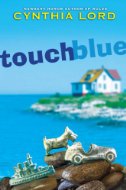
Touch Blue - for Tween Tuesday

Tween Tuesday was started over at Green Bean Teen Queen as away to highlight awesome books for the 9-12 yr olds or Tweens. Any book highlighted on Tween Tuesday also counts for the In the Middle Reading Challenge! This week's book is:


Lord, Cynthia. Touch Blue. New York: Scholastic Press, 2010. Print.
[Book cover credit: librarything.com/work/9923239]

Booktalk:
Losing a best friend can feel like losing the whole world, even though you're not. But when Tess's best friend Amy moves off the tiny island they called home Tess and the rest of the kids on the island really do almost lose it all. Without Amy and her four siblings, the state of Maine cannot justify keeping the island school open and Tess's mom employed as the teacher. With no school and no job for her mother, Tess, her little sister Libby, and their parents will have to move to the mainland. Then the Reverend comes up with a plan to save the school: bring five foster kids to the island, enough to keep the school open. So Tess's family, along with a few others on the island, makes room in their home and their lives for a foster child, Aaron. He'll get a home with a real family, and they'll get to stay on the island. The island families will be getting what they want and helping others in the process, and there's no rule against that, is there?

Review:
Tess certainly has a lot of worries. Not only has her best friend leaving left her without a companion all summer (and we won't even talk about how Amy's letters to Tess have become less and less frequent), but it could cause her to lose her whole life as she knows it. And Tess cannot have that. She's happy on the island, loves being able to see the ocean all around her. She loves going lobstering with her father all summer long, and she loves going to school in a one-room schoolhouse with every other kid on the island. Losing all of that to move to a landlocked town where all the kids already know each other and don't need a lobster girl for a friend would be devastating.

Tess is all for the plan to save the school and is excited to have a foster kid stay with her family. She has read plenty of books about foster kids (apparently the state cannot afford to keep a one-room schoolhouse on this island, but a well-stocked library is no problem). In her mind, Aaron is the 12 year old boy version of Anne of Green Gables and she cannot wait to have a bosom friend again to run around the island with. As Aaron spends more time on the island, Tess has to admit that he is more Gilly Hopkins than Anne. Then, finally, she realizes that he isn't a character from a book (ha), but a kid who misses the life he left behind just as much as she would miss her island if she had to leave it.

Aaron and the other foster kids try to settle into life on the island, and Tess, her family, and the rest of the island start to accept the foster kids as their own. And somewhere along the way Aaron and Tess become friends. For so much of the book, Tess is grasping at straws with Aaron, afraid to offend him or trying to shield him from other people on the island, and Aaron is so stand-off-ish and hesitant to let Tess or her family in. Then they finally share a secret. He lets his guard down a little and she starts treating him like any other friend. I wanted SO BADLY for things to work out for them, even as I thought that their secret plan to make things right was a horrible idea. Lord has managed to create two compelling characters in a small amount of time, and she does it through, really, a series of tiffs and misunderstandings. The fact that these normal kids are in this bizarre situation where Tess's continued happiness requires that Aaron not attain what he dreams to be his (being reunited with his family and mainland life) makes it all the more interesting and complicated.

Still, in the end Touch Blue ends up being a sweet story about two kids dealing with BIG things like adults that let you down and situations that are beyond anyone's control. But it's also about lobsters, good luck charms, and a five year old sister who always wants to play Monopoly.


Touch Blue was released August 1st and is now available for purchase!


Book source: Picked up at ALA

Friday, August 6, 2010

The Dead-Tossed Waves

Ryan, Carrie. The Dead-Tossed Waves. New York: Delacorte Press - Random House Children's Books, 2010. Print. The Forest of Hands and Teeth 2.
[Book cover credit: librarything.com/work/8363459]

Booktalk:
Gabry always follows the rules, does what she's supposed to. She's grown-up watching her mother kill the Mudo that wash onto the beach at every high tide; she knows that the rules are there to keep her safe and she knows the consequences for breaking them. Still, she lets herself be convinced to climb the barrier to hang out under the ruins of a roller coaster with a bunch of other kids. Cira, her best friend is going and so is Catcher, Cira's big brother and the object of Gabry's secret affection. Everything starts out perfection. She even gets some alone time with Catcher, which is why she's so far from the rest of the group and able to escape back to Vista when a Breaker shows up, biting and infecting Gabry's friends.

Review:
I wasn't that big of a fan of The Forest of Hands and Teeth, and when this book, its sequel, finally came out, I decided I wasn't going to bother. But there is was, staring at me from the library shelves, and I had to grab it. TFoHaT left me with lost of questions about the Sisterhood, life after the return, and the survival of Mary and crew. And I wanted answers, dammit! The Dead-Tossed Waves held the possibility of answers and a story about the new generation of folks post-return besides. On some level it delivered, but on another, not so much.

All of my leftover questions from TFoHaT were answered, kind of, all in about 5 pages towards the end, and those answered were satisfying. Buuut those answers did not justify the rest of the book for me. There was less monotony and repetition in this book than in the last; really and truly a lot happened. Buuut it still didn't do it for me. A lot of the book was Gabry's reactions to what was going on around her, especially what went on between her and Catcher and her and new guy Elias. And, well, I didn't like being in Gabry's head. There were SO MANY TIMES that I wanted to shake her because she would read a situation as completely opposite of how I read it and/or completely opposite of what was actually going on. It helped to build tensions and intrigue the first couple of times she thought one of the boys was disregarding her or brushing her off when in actuality they were trying to profess their undying love, but when it happened EVERY TIME THEY TALKED, it got a little old.

And I have lingering questions. Again. These questions might convince me to pick up The Dark and Hollow Places when it comes out next March, but little else will.


Book source: Philly Free Library

Tuesday, August 3, 2010

Don't Know Where Don't Know When for Tween Tuesday

Tween Tuesday was started over at Green Bean Teen Queen as away to highlight awesome books for the 9-12 yr olds or Tweens. Any book highlighted on Tween Tuesday also counts for the In the Middle Reading Challenge! This week's book is: 


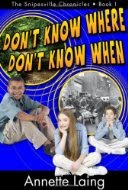
Laing, Annette. Don't Know Where Don't Know When. Statesboro, Georgia: Confusion Press, 2007. Print. Snipesville Chronicles 1.
[Book cover credit: Provided by the author. Thanks!]

Booktalk:
When Hannah and Alex are so rudely torn from their happy lives in San Francisco to move to the middle of nowhere Georgia, Hannah expects her entire life to turn into one huge snooze-fest. They're both forced to go to summer camp at Snipesville State College, where Alex manages to make a friend and Hannah manages to find a Starbucks instead of her camp. When Alex and his new friend Brandon spot Hannah ditching, they decide to join her, and they all end up heading to the library. After finding an WWII identity card in a book and having a weird encounter with a professor, all three decide to head back to the Starbucks. Only when they leave the library, they're no longer in Snipesville and Starbucks hasn't yet been invented.

Review:
I'll admit, the opening of this book was a little slow for me. All the time spent with Hannah and Alex before they go back in time (and before they even get to Georgia), didn't really do anything for me. BUT, if you stick it out through Hannah's whining about how unfair her life is (actually, this continues throughout the book), they'll meet up with Brandon and end up in WWII England where things get very cool. In WWII England, Hannah, Alex and Brandon are all evacuees for the London, sent to the English countryside to escape the Blitz (exactly like the Pevensies in The Lion, the Witch and The Wardrobe!). Hannah and Alex are taken in by an almost welcoming couple. Brandon, who is black, is taken back to London. Though black children were also evacuated during the bombings of London, it was much harder to find people to take them in. Also, black people weren't all that common in England during this time, so Brandon spends the entire book being kind of a novelty. Hannah and Alex are left to get used to the British countryside during the war and desperately try to find out what happened to Brandon in a society that doesn't tell unpleasant things to children. Meanwhile, Brandon runs away from the man who took him back to London and is presumed dead after a bombing.

But he's not dead; he's really in WWI England. He's even in the same town as Hannah and Alex, just 25 years earlier! Brandon manages to find friendly people (with some help) and even a job, but being black is a much rarer thing in 1915 than it was in 1940. And the attitudes toward black people weren't all that great either. In her acknowledgments, Laing states that the past is not particularly politically correct, which is true, and neither is her portrayal of it. The scenes set both in 1915 and in 1940 are rich in historical detail, including the attitudes of the people in them. While Alex seems to go along pretty fine throughout the story, Hannah is constantly bristled by the treatment of children (what she considers a beating, everyone else considers a well-deserved spanking) and Brandon is constantly affected by peoples reactions to him as a "colored" young man. Though Brandon makes it through his time traveling experience suffering from nothing more than hateful words, the black people he meets both during The Great War (WWI) and WWII do not fare as well.

I managed to get completely caught up in this book. There is a story inside a story that needs solving in order for Hannah, Alex and Brandon to make it back to 21st century Georgia, and though they don't understand how or why, it is connected to their present day lives. Also, given that he's in the same town, Brandon's experiences in 1915 England have some really close ties to the people he, Hannah and Alex meet in WWII England. There were so many ways that all of these connections and different-name-same-person instances could have been screwed up or over simplified, but Laing manages to make them all make sense and even manages to make some of them surprising. My only disappointment in this area was Peggy, and it totally wasn't Laing's fault. I simply wanted 1915 Peggy to grow up to be a different person, but not everyone can live up to their full potential (I'm still angry about who she grew up to be, but I don't want to ruin the surprise).

In short, this is a great time travel book. I wasn't so caught up in the logistics of the time traveling that I lost the ability to be caught up in the times where they ended up. It's also a great look at the day-to-day lives of some of the people left behind in England during the fighting of each world war.


Now, about the cover: If you see slightly older reviews of this book around the blogosphere, or even look this book up on amazon (librarything, goodreads, etc.) it has a different cover where the kids are not in silhouette. While I would usually be all for actual kids rather than kid-shaped shadows, especially when one of the main characters is a POC, I really don't like the old cover. It is, to be honest, why it's taken me two months to get around to reading and reviewing this book. The older cover is on the copy I received. It looks so much more like a history book than a time travel history book, and we all know there is a HUGE difference between the two. While Don't Know Where has the potential to be about kids sent to the past to learn all about it, most likely in a school-type setting, that's not what this book ends up being. But that is what the old cover portrays. I don't know why, but the new cover art for the second printing, in addition to matching the cover art on the sequel, gives it more of an adventure or fantasy feel to me. Kid-shaped shadows are a bit cartoon-y, I guess, and apparently that's what I need in order to feel like I haven't been "assigned" a book specifically to learn from it.

And, yes, I've always been a huge fan of historical fiction but hated studying history. How did you know? :)


Book source: Review copy provided by the author. Thanks Annette!

Saturday, July 31, 2010

Gringolandia

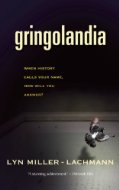
Miller-Lachmann, Lyn. Gringolandia. Willimantic, Conn.: Curbstone Press, 2009. Print.
[Book cover credit: librarything.com/work/8139206]

Awards:
ALA Best Books for Young Adults (2010)
Americas Award Honorable Mention

Booktalk:
Daniel's life is pretty good, but not perfect. His mom is a grad student so there's not a lot of money, his sister is getting to the age where she's real angsty and annoying, and every year his mother heads a letter writing campaign to free his father from a prison in Pinochet's Chile. Still, Dan's pretty happy. He plays in a band, has a great girlfriend, and speaks with a sexy accent leftover from his Chilean childhood. Then Daniel's mother gets word that her husband will be released and allowed to join his family in America. That should make everything finally perfect. But when Daniel's father is released, he is a physically broken and psychologically scarred shell of the father Dan remembers.

Review:
Gringolandia opens with an Author's Note explaining the very real circumstances and events in Chile that lead up to what is experienced by the fictional characters in the book. A short bibliography for further reading is also provided. Usually this kind of thing goes at the end of the story when readers are more likely to be interested in picking up 4-5 books on the topic. I thought it was a weird choice to put the note and bibliography at the beginning...until I started reading.

Miller-Lachmann expects a lot of her readers, in a good way. Her author's note allows her not to take precious page space away from the story later. For example, we see Dan's father derisively call the States "Gringolandia" and refuse to learn English. We see the disdain he has for the USA and for his wife's choice to bring the family there. Miller-Lachmann doesn't tell us that his dislike (to put it kindly) for America is because the United States government helped Pinochet gain power in Chile. She trusts us to put two and two together, which she is only able to do because she explained Pinochet's rise to power in her opening note.

Because, let's be honest, not many Americans know that much about Chile and certainly don't know that much about what it was like to live through the turbulent times Dan and his family live through, hence the need for the author's note. I don't read a lot of historical fiction about specific events (which I guess this is, even though it makes me feel really old to call the decade in which I was born history), but much of the historical fiction published in the States of this type is about very well-known events. Even if the average American reader doesn't know the ins and outs of the actual event, they know the basics. Think about how much historical fiction is set during WWII or the French Revolution, or is about Anastasia Romanova. Gringolandia fills a huge gap. I can't think of any other historical fiction for teen readers about South America, let alone about Chile. In fact, a search in WorldCat for "historical fiction" and "South America" only returns 78 books, including duplicates for large print titles. "Historical fiction" and "Chile" returns 84, and those numbers don't even begin to touch on the intended audience of the titles.

Even if there were tons of titles about political prisoners under Pinochet, I think that Gringolandia would still stand out. Without repeating events, this story is told from three distinctive points of view: Dan's, his father's, and his girlfriend's. Dan's father, Marcelo, talks about what it was like in prison (and believe me, even the polite version presented here can get graphic), but the strong point in his narrative is his passion for a free Chile. He doesn't regret the actions he took that led to his arrest; he desperately wants to continue that work, regardless of the consequences, now that he's been released. He's also going through some serious PTSD that is tearing his family apart. His perspective is contrasted with Dan's. Dan doesn't really know what his father did (you can't be questioned about what you don't know), and he doesn't understand how his father could put himself and his family at such great risk for a cause. He certainly can't understand why his father doesn't want to just move on and make the best of things. Like his father, Dan has trust issues and a serious flinch in the face of policemen, but without the conviction that helps his father work through these issues. Courtney, Dan's girlfriend, is all fired up about what happened to Marcelo and what is happening in Chile in general, but she is also woefully naive. Semi-spoiler: There is a great scene when they all return to Chile. Courtney decides to join a women's protest and things go as wrong as humanly possible. From Dan's POV: "Courtney. I think she can't believe these [soldiers] will do anything to her--like her pale skin and blond hair are a Plexiglas bubble around her, keeping all the bad things away" (241). It's kind of the perfect way to describe her attitude throughout the entire book. End spoiler. Courtney breaks through to Marcelo when no one else can by believing whole-heartedly in what he believes in, guided by a simple sense of right and wrong and of fairness.

There is so much going on in this book along side of so much actually happening. I'm not going to lie, it's intense and not always easy to read. But it is so worth it! Not only will the reader learn about events not often discussed in American history classes, but they'll also get to know some ridiculously complex characters and watch them make impossible choices for themselves and the greater good.


I read Gringolandia as one of my PK books, but the fact that Courtney's dad's a pastor didn't even come up in my review. It's important to her character and back story, but not all that important to what is going on with her, Dan and Marcelo. The big PK moment is when Dan, her boyfriend and the person she is the most close to, says something at lunch implying that Courtney couldn't possibly know what he's going through at home. Her family and home-life are too perfect. This is followed by a one-line chapter from Courtney's perspective: "Dan doesn't know everything about me" (64). It could have been said by almost all the PKs I've read about in the last month.


Book source: Philly Free Library
Thanks to MissAttitude at Reading In Color for the recommendation!

Wednesday, July 28, 2010

Bad Faith

Philip, Gillian. Bad Faith. Glasgow: Strident Publishing, Ltd., 2008. Print.
[Book cover credit: librarything.com/work/6367859]

Booktalk:
Being the daughter of a One Church cleric has its perks. Cassandra and her family are above suspicion in the highly monitored religious society that England has become, if only just slightly. Unfortunately, every perk comes with a drawback. Most of the people Cassandra comes in contact with through her father's work are in the same situation, and some of them are above the law altogether. And everyone knows it.

Review:
How do you not love a book that starts like this:
Before I slipped on the mud and fell over the Bishop, our family didn't have a lot to do with murder.
A little, but not much.
p.1
When Cassandra literally stumbles onto the body of an important Bishop, her father's boss, she and her best friend Ming hide the body. They don't know who killed the Bishop, but they know someone in Cassandra's family is involved. Her family has been ruled by a complicated web of secrets that dates back to before her parents were even married. As more and more of these secrets come out into the open, Cass's world falls apart a little bit more. She has to deal with harboring her own secret about the location of the Bishop's body while she finds out all kinds of things about her parents and brother, tries to avoid a pack of school bullies with religion on their side, and deals with lingering memory and cognitive issues from being his by a car years earlier that just make everything more confusing and complicated. Oh, and she falls in love with her best friend Ming.

As if all that isn't enough for one girl to deal with, it's all happening in the middle of a theocratic dictatorship and her dad works for the church. One Church isn't like a church in the way that we think of it today; it's more an instrument of the state. There is a definite religion involved, and it seems like it is Judeo-Christian based, but I don't think it's supposed to be any religion that is recognizable today. Cass's father is practically a heretic because he still carries a cross from when he was a rector in a pre-One Church church. No one really believes in what the One Church preaches, they just all say that they do because it's illegal not to. Except Ming and his parents, and boy do they pay for it. As a consequence of their non-belief they lose a large property, Ming gets beat up at school constantly with no consequence other than being constantly suspended for "provoking" other kids, and Ming's parents are constantly being pulled in for questioning by the police. All in the name of the One Church. While some may read this as a book that is anti-religion, I think that Philip has done a wonderful job of making it a book that is anti-absolute power instead. When a large group of people above is the law while everyone else is constantly looking over their shoulder afraid of being watched or heard, things can never end well.


I didn't talk about it in my review, because it comes out late enough in the story to be a little spoilery, but sexual abuse is also present. Nothing is described in detail, but it's there, and it is perpetrated by a "celibate" religious man. This probably makes the book very controversial, but this person's status as above the law is the enabling factor in the abuse, not his perceived celibacy or religious role.


Book source: I bought it.
Bad Faith is not currently in print in the US, but it can be purchased (with free shipping, no less!) at the Book Depository.

Tuesday, July 27, 2010

Because of Winn-Dixie

Tween Tuesday was started over at Green Bean Teen Queen as away to highlight awesome books for the 9-12 yr olds or Tweens. Any book highlighted on Tween Tuesday also counts for the In the Middle Reading Challenge! This week's book is:

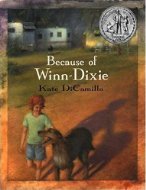
DiCamillo, Kate. Because of Winn-Dixie. Cambridge, Mass.: Candlewick Press, 2000. Print.
[Book cover credit: librarything.com/work/1577]

Awards:
BCCB Blue Ribbon Book (2000)
New York Time Notable Books - Children's Books (2000)
Parents' Choice Awards - Fiction (2000)
School Library Journal Best Books (2000)
ALA Notable Children's Book (2001)
Josette Frank Award (2001)
Newberry Honor (2001)
SEBA Book Award - Children's (2001)
As well as a slew of state awards and a mention in 1001 Children's Books You Must Read Before You Grow Up

Booktalk:
My daddy is a good preacher and a nice man, but sometimes it's hard for me to think about him as my daddy, because he spends so much time preaching or thinking about preaching or getting ready to preach. And so, in my mind, I think of him as "the preacher."
p.13

Opal knows her daddy, the preacher, loves her, but she also knows his new church is the reason she's spending a lonely summer in a new town. Until the preacher sends her out for a box of mac n'cheese. When she gets to the Winn-Dixie, she finds the happiest dog she's ever seen frolicking and wreaking havoc in the produce section. To keep that happy dog from the pound, Opal gives him the only name she can think of in a hurry, Winn-Dixie, and takes him on home. With a dog who has a tendency to smile so big that it makes him sneeze, Opal has the courage to talk to people, including the preacher, and make some new friends.

Review:
Oh, Winn-Dixie. Anyone who's ever had a really friendly dog, especially a really friendly ugly mutt, will tell you that every outlandish and wonderful thing that happens in the book is totally possible. Well, maybe not, but having a good dog is great and Winn-Dixie is just who Opal needs to kick-start her new life in a new town. The preacher is too busy with his new church to be Opal's best friend until school starts in the fall, and Opal's mother is gone and has been for a while. The preacher doesn't like to talk about her or why she left. But once she has Winn-Dixie, Opal isn't alone anymore. She tries out her ideas on him, tells him what she wants, and pours out her heart to him in ways she probably couldn't with another human being, and Winn-Dixie just gives her his goofy smile and unconditional adoration in the way that good dogs will do. It gives her the courage to talk to the guy at the pet store (Winn-Dixie does need a collar), the woman at the library (who thinks Winn-Dixie is a bear at first glance), the town "witch" (whose yard Winn-Dixie runs into in search of peanut butter), and various kids from her daddy's church who are drawn to Winn-Dixie or make fun of her about him. And Winn-Dixie gives Opal the courage to talk to the preacher about her mother. When Winn-Dixie is done working his magic, Opal has a whole cadre of people who love her.

I wouldn't say that religion plays a huge role in Because of Winn-Dixie, at least not explicitly. Opal uses tenets of what her father teaches her both to her advantage and as goals to work towards. She gets to keep Winn-Dixie because he is "an unfortunate," and Christians are supposed to help the unfortunate. On the other hand, she has to be nice to pinch-faced Amanda because she not only goes to the preacher's church, but because something very sad happened to her in the past. And the preacher prays for a mouse that Winn-Dixie catches in the middle of his sermon but does not kill. :) Even though religion does not really factor into the storyline, this book is just as much about how Opal's relationship with the preacher changes as it is about a little girl and her dog. At the beginning of the book, in addition to calling her father "the preacher" in her head, Opal likens him to a turtle. He pulls his head back in his shell when things get hard to protect himself from everything, even his daughter. He's able to do that precisely because he spends so much time "preaching or thinking about preaching or getting ready to preach" (13). Throughout the course of the book, and with Winn-Dixie's help of course, the preacher learns not to shut out Opal but instead to open up to her.

Overall this is a sweet book. There's not a lot of action, but there is a lot of storytelling as Opal gets to know all of her new friends. It can be episodic at times, but it all comes together in the end.


Book source: Holy Spirit Library at Cabrini College
Thanks to Charlotte for reminding me about this book!


For folks who refuse to read dog books: This isn't Old Yeller. There are some tough moments, but nothing compared to classic "dog stories" or, you know, The Knife of Never Letting Go.

Friday, July 23, 2010

Notes on PK month

I'm going to take this opportunity to do a little housecleaning, starting with a warning:

Even if you've scheduled a bunch of posts in advance, you shouldn't just leave your blog alone for weeks at a time assuming that everything is going along as planned.

I didn't mean to leave a week and a half post-less! I also didn't mean to post almost a month's worth of PK book reviews with no explanations! So here we go, the post that I thought was scheduled for July 1st and an (almost) wrap-up all in one:


Earlier this summer, I made an epic library trip, the kind where you pick up a million holds AND a pile of stuff off the displays as well. When I got home and was organizing my loot into piles, I realized that I'd managed to pick up 3 very different books featuring PKs (Pastor or Preacher's Kids). Apparently even though actual PKs might be a very small part of the YA population, books about them aren't all that rare. Having a main character (or really important secondary character) whose family life revolves around the church can make for an easy entry into discussing religion without always moving into the realm of Christian fiction or the "problem" novel. After reading The Full Spectrum, a book of short autobiographical pieces by queer youth in which religion kept coming up as a central theme, I was interested in looking at how religion is treated in fiction written by adults for teenagers. Looking for books about PKs seemed like a good way to do that. Plus, July was coming up. My mom's birthday is in July, and she's a PK.

So July will be [has been] PK month here at lucy was robbed. I think I've managed to find a good range of books featuring PKs, including a paranormal romance and a dystopian novel as well as a slew of realistic fiction works. My reviews of these books [have and] will look more closely at the way that religion is presented in relation to the subject matter of the book as well as how the main characters' views on religion change throughout the course of the story. Religion can be such a touchy subject. By the time readers are teenagers, most of them know not to discuss it in mixed company (no politics or religion, right?), but that doesn't mean that they don't have questions about and struggles with the religion in which they've been raised or the religion they may be adopting. YA novels can be a great tool to open up discussion about religion or to just let teen readers know that they are not the only ones dealing with these issues. I know that I am looking forward to dissecting these books a little bit, and I hope you [have] enjoy[ed] looking through these books with me!

And Happy Birthday Mom! :)

Here is the list of books that I have reviewed for PK month:
Saving Maddie by Varian Johnson
The Dark Divine by Bree Despain
Once Was Lost by Sara Zarr
Simply Divine by Jacquelin Thomas
Nothing Pink by Mark Hardy
Because of Winn-Dixie by Kate DiCamillo
Gringolandia by Lyn Miller-Lachmann
Bad Faith by Gillian Philip

I realize that this list has all Christian protagonists (or they at least have Christian parents). I did make an effort to find books about the PK equivalent in other religions, but was unsuccessful. That doesn't mean that books like Does My Head Look Big in This by Randa Abdel-Fattah are not on-deck to be read/reviewed in the near future; they just didn't fit for PK month.

Thanks for sticking around, folks, and sorry for the week plus of silence!